A DEED CHANGES THE STORY
A Missing Chapter in John Gowton's Life
How one difficult date helped narrow a twenty-year gap in my great-grandfather's story.
In 1880, my great-grandfather John Gowton was living with his family at Jacob's Creek in southwestern Pennsylvania. By 1900, the census placed him in Upper Tyrone Township near Everson.
Somewhere during those twenty years, the family had moved.
Normally, the 1890 census might have helped fill that gap. But most of the 1890 population census was destroyed, leaving one of the most frustrating gaps in American genealogical research.
Then I obtained a copy of an old deed.
The Date I Had Wrong
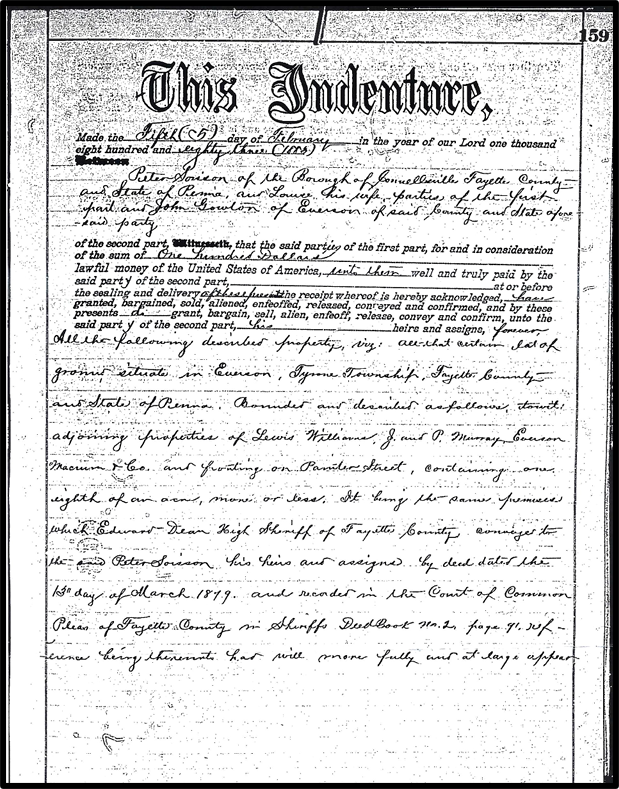
Fayette County Deed Book 58, pp. 159–160. The handwritten opening dates the indenture to February 5, 1883.
For some time, I had been working under the assumption that this deed dated from the 1890s. But when I returned to the original document and looked more carefully at the faded handwriting, the date told a very different story.
February 5, 1883.
The deed was executed on February 5, 1883, and recorded on March 12, 1884.
It was only a date. But it moved John Gowton's documented connection to Upper Tyrone Township back more than a decade from what I had believed.
Why the Date Matters
The significance of 1883 becomes clearer when placed beside the census records.
In 1880, John Gowton and his family were living at Jacob's Creek. The next surviving federal census that places John is twenty years later, in 1900, when he was living in Upper Tyrone Township near Everson.
Between those two census records lies a gap made especially difficult by the loss of most of the 1890 census.
The 1883 deed does not prove that John and his family were already living on Lot 329. A property purchase and a change of residence are not necessarily the same event. But it does establish something I had not known before: John had acquired property in Upper Tyrone Township by February 1883.
Instead of wondering whether his move occurred sometime during the 1890s, I now had evidence connecting him to Upper Tyrone only a few years after the 1880 census.
The missing years had suddenly become much smaller.
Following Lot 329
The deed provided another clue that would prove just as important as the date: Lot 329.
A lot number may seem like an insignificant detail. But unlike street addresses, which can change over time, the lot number gave me something I could follow through later property records.
The next clue came from an old plan of Everson.
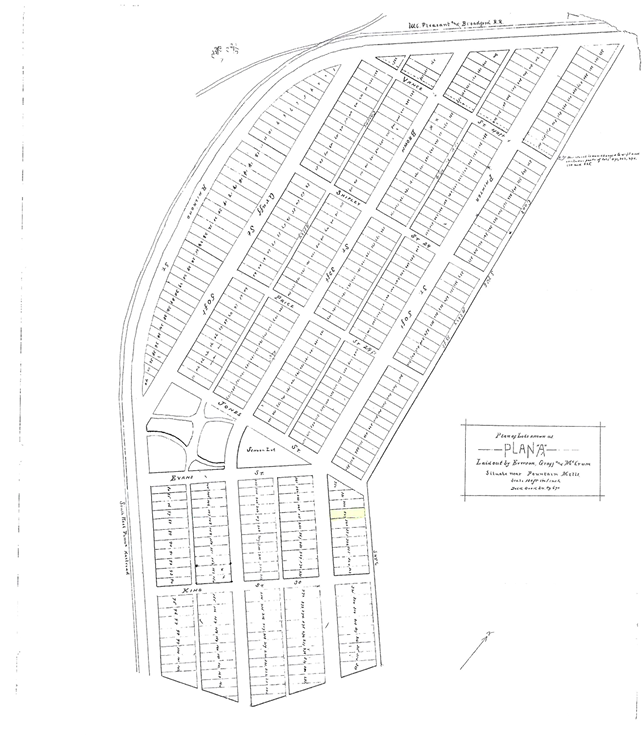
Plan A of Everson, showing the numbered lots used in the original property records. Lot 329 is highlighted.
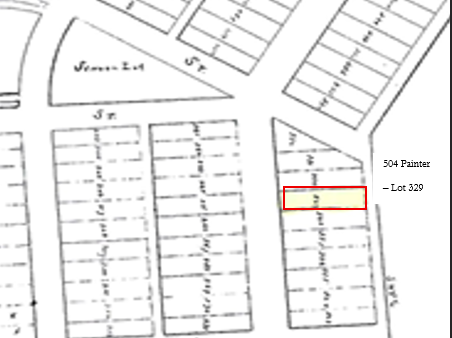
Detail of Plan A showing Lot 329. Later property records connect this lot to present-day 504 Painter Street.
The map gave Lot 329 a physical location within the developing community of Everson. But I still needed to know whether that nineteenth-century lot could be connected to a property that exists today.
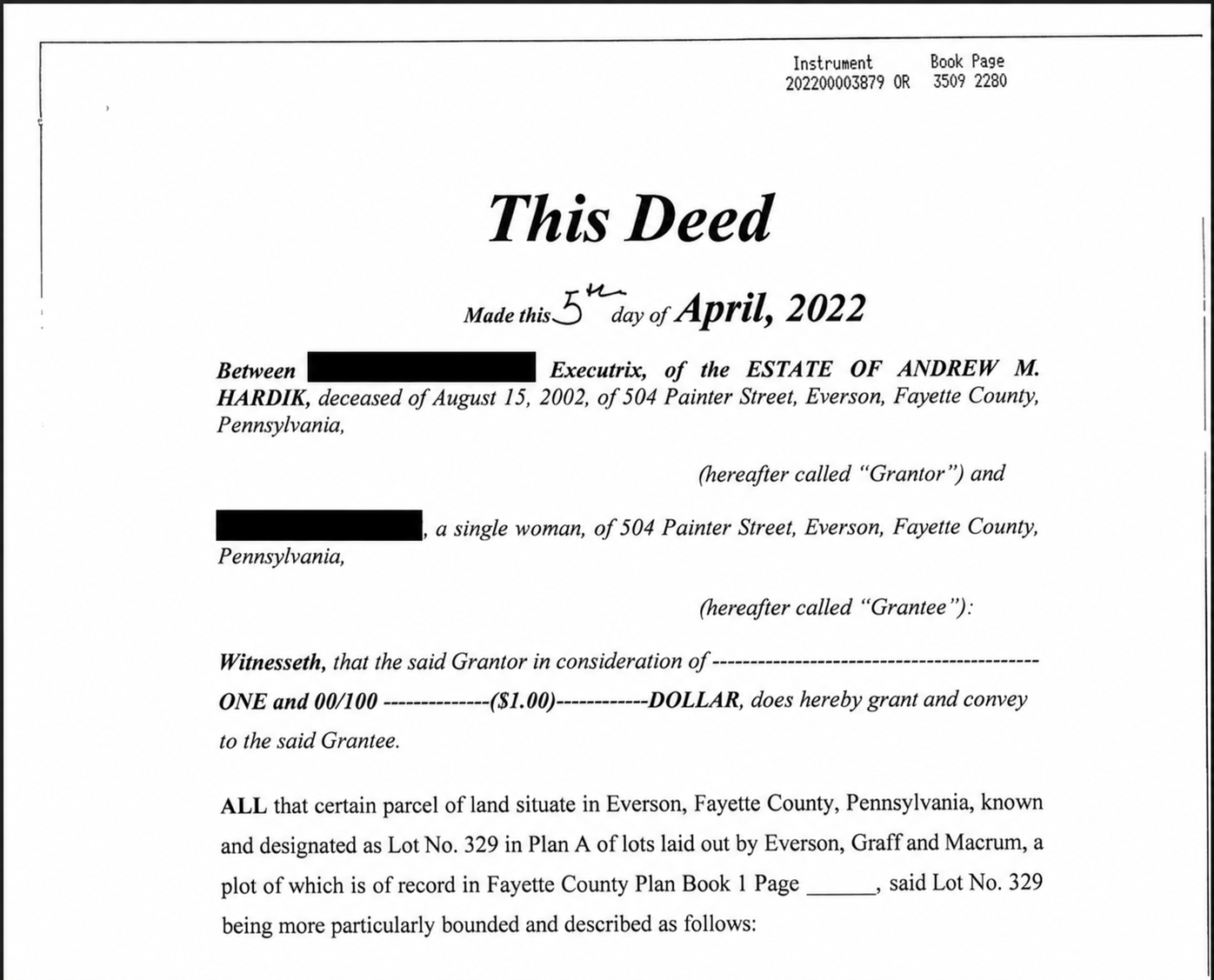
The answer came from a modern deed.
A 2022 property deed still describes the property as “Lot No. 329 in Plan A of lots laid out by Everson, Graff and Macrum.” It places the lot on the east side of Painter Street, north of King Street.
Most importantly, the modern record provides something the 1883 deed could not: a present-day address.
504 Painter Street, Everson, Pennsylvania.
Nearly 140 years after John Gowton acquired Lot 329, the lot number had survived in the property record long enough to connect his nineteenth-century deed to a place I could identify today.
Then the Property Appeared in a Sheriff’s Sale
Twelve years after John Gowton acquired Lot 329, the property associated with John appears again in the surviving record—but under very different circumstances.
In May 1895, a Fayette County sheriff’s-sale notice listed a “Tract of John Gowton in Upper Tyrone Township” at the suit of A. S. Livengood.
The notice does not, by itself, tell the whole story. It does not explain the debt or dispute behind the proceeding, nor does it establish what ultimately happened to the property. But it places John and property associated with him, in another surviving record at a specific moment in time.
That matters because the deed and the sheriff’s notice begin to fill a period that the census records leave largely blank.
In 1880, John and his family were at Jacob’s Creek. By February 1883, he had acquired property in Upper Tyrone Township. Twelve years later, in 1895, that property was caught up in a sheriff’s-sale proceeding.
The missing years were no longer entirely missing.
They were beginning to emerge from records I had not originally known to look for.

Sheriff’s-sale notice naming a tract of John Gowton in Upper Tyrone Township at the suit of A. S. Livengood, May 1895.
What the Records Don't Tell Us
Finding the deed answered one question, but it also reminded me how much of an ordinary life can disappear from the historical record.
John Gowton did not vanish between the censuses of 1880 and 1900. He was living, working, raising a family, acquiring property, and confronting whatever circumstances eventually placed that property in a sheriff's sale.
It was the record of those years that had largely vanished—not the life.
That distinction has become increasingly important to me as I research my family.
Genealogy often begins with the records that survived: a census page, a birth or death record, a newspaper notice, a deed. But the absence of a record can create its own misleading story. We begin to see gaps in a person's life simply because we have gaps in the evidence.
The deed for Lot 329 recovered one small piece of those missing years. The sheriff's-sale notice recovered another. Neither tells the whole story, and there are still questions I may never be able to answer.
But that is also what this project has increasingly become about: looking into the spaces between the surviving records and asking what—and who—may have been lost there.
A Deed Changes the Story
I began with a deed I could barely read.
At first, I thought it dated from the 1890s. Looking again—more carefully this time—I realized that the faint handwriting said something very different: February 5, 1883.
One corrected date narrowed a twenty-year gap. A lot number led to an old town plan. The old plan led to a modern deed. And a newspaper notice revealed another moment in the property's history.
None of these discoveries was dramatic by itself. They were fragments.
But put together, they changed the story.
And somewhere in the records I have not yet found, there are almost certainly more fragments waiting.
The research continues.
Follow the discoveries as they unfold.
New records, photographs, family connections, and forgotten stories continue to emerge from the research.