Finding Historical Records Online
You don't have to master every genealogy database before you begin. Some of the best teachers are already available online—and many of their tutorials are free.
This page offers a few videos, tutorials, archives, and other resources that I have found useful in researching my own family history. Rather than recreate their excellent instruction, I’ll point you toward people and organizations that can help you understand how these research tools work.
YouTube can be an excellent resource for learning how to navigate Ancestry, FamilySearch, and other genealogy platforms. Artificial intelligence can also help explain unfamiliar tools, organize research questions, and guide you through technical tasks. I have found it especially useful in organizing my research and building this website. AI should support—not replace—original records, reliable sources, and your own judgment.
I’ll also share examples from my own research—including the successes, mistakes, and occasional dead ends that are part of discovering the past.
Sometimes the record you're looking for exists. It just isn't online yet.
When that happens, the question changes from “How do I find it online?” to “Where does the original record live, and how can I get access to it?”
New to Genealogy? Start Here
FamilySearch offers a free series of short, beginner-friendly videos covering the essentials of starting a family tree, searching historical records, adding sources, and organizing what you discover.
FamilySearch is free to use, although some records may link to partner websites that require payment. Its family tree is collaborative, so other researchers may contribute to profiles of deceased people. Attach reliable sources and keep copies of your own research.
Recommended Tutorial: Using the FamilySearch Catalog
Before following my own search, I recommend watching this FamilySearch tutorial. It provides a clear introduction to using the FamilySearch Catalog—one of the most useful tools for discovering records that may not appear in a standard name search.
One important lesson is that finding a record in the catalog does not necessarily mean the record itself is available online. My own search below provides a real example of what happens when it isn't.
My Search: Following the Trail of a Fayette County Deed
Where I Started
I was trying to locate a property deed in Fayette County, Pennsylvania. I already had information from a property index that gave me a specific record to pursue.
I wasn't starting from scratch. The information I had already collected gave me several clues I could use to narrow the search:
Country: United States
State: Pennsylvania
County: Fayette
Record type: Deed / land record
Name: John Gowton
Approximate year: 1884
Deed Book: 58
Pages: 159–160
Property: Lot 329
Other party: Everson / Macrum & Company
What I knew: This was more than a general search for John Gowton. I had a deed book number, specific page numbers, a lot number, an approximate year, and the name of the other party. In other words, I had enough information to identify the record I was looking for—if I could find a way to access it.
The Search Begins
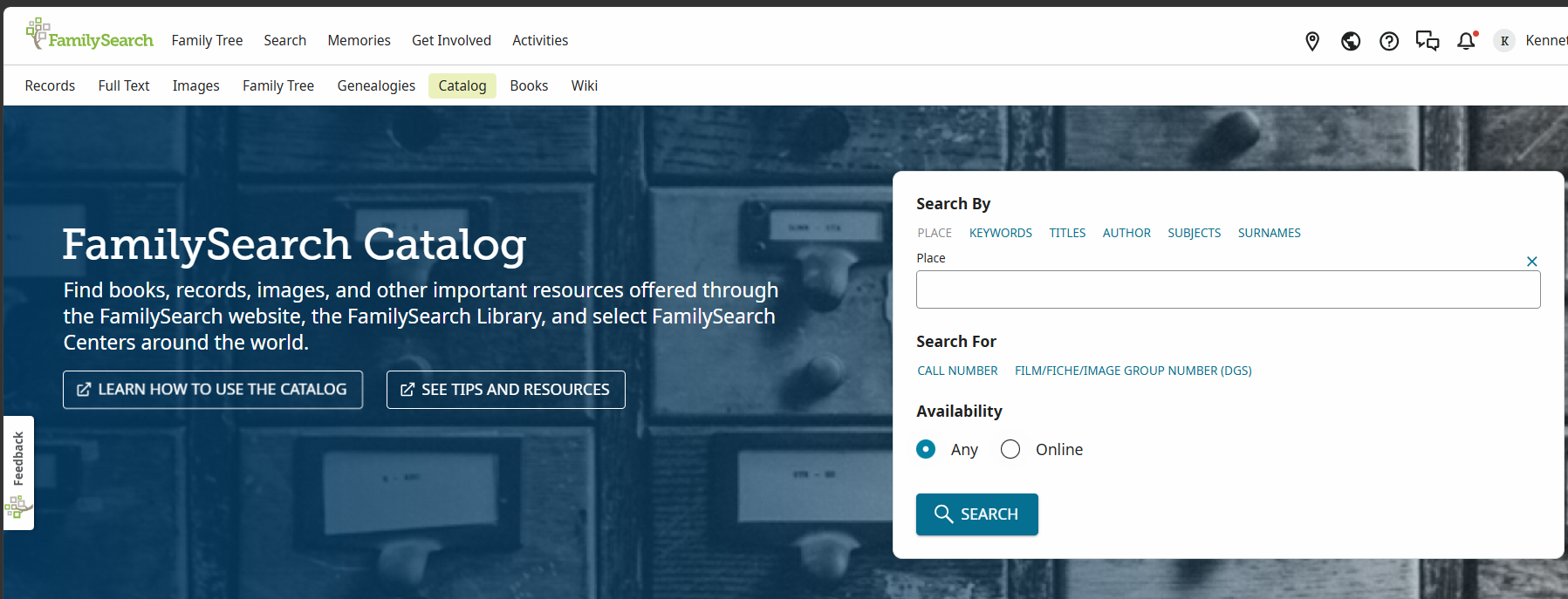
With those clues in hand, I turned to the FamilySearch Catalog. I searched by place—Fayette County, Pennsylvania—looking for the collection that might contain the land records I needed.
My goal wasn't simply to find John Gowton's name. I was trying to locate Deed Book 58, pages 159–160—the specific record identified by the property index.
I Found the Collection—But Not the Deed
The FamilySearch Catalog confirmed that Fayette County land records existed and helped me identify the collection I needed. That was progress—but it wasn't the same as finding the deed itself.
I was looking for Deed Book 58, pages 159–160. The problem was no longer identifying the record. The problem was accessing it.
The record I needed was not available to me as a digitized image online.
This is where my original research strategy reached a dead end.
When the Search Strategy Has to Change
A dead end in online research doesn't necessarily mean the record doesn't exist. Sometimes it means the record hasn't been digitized, isn't available online, or can only be accessed somewhere else.
That's when the research question changes. Instead of asking, “What should I search for next?” I have to ask, “Who has the record, and how can I get access to it?”
Good research sometimes means knowing when to stop searching the same way—and start looking for another way in.
More Research Resources Coming
Historical research is a continuing process. As I discover useful videos, tutorials, archives, and research tools, I'll share selected resources here—along with examples of how I used them, what I found, and sometimes what I didn't.
The goal isn't to have all the answers. It's to keep learning where to look next.