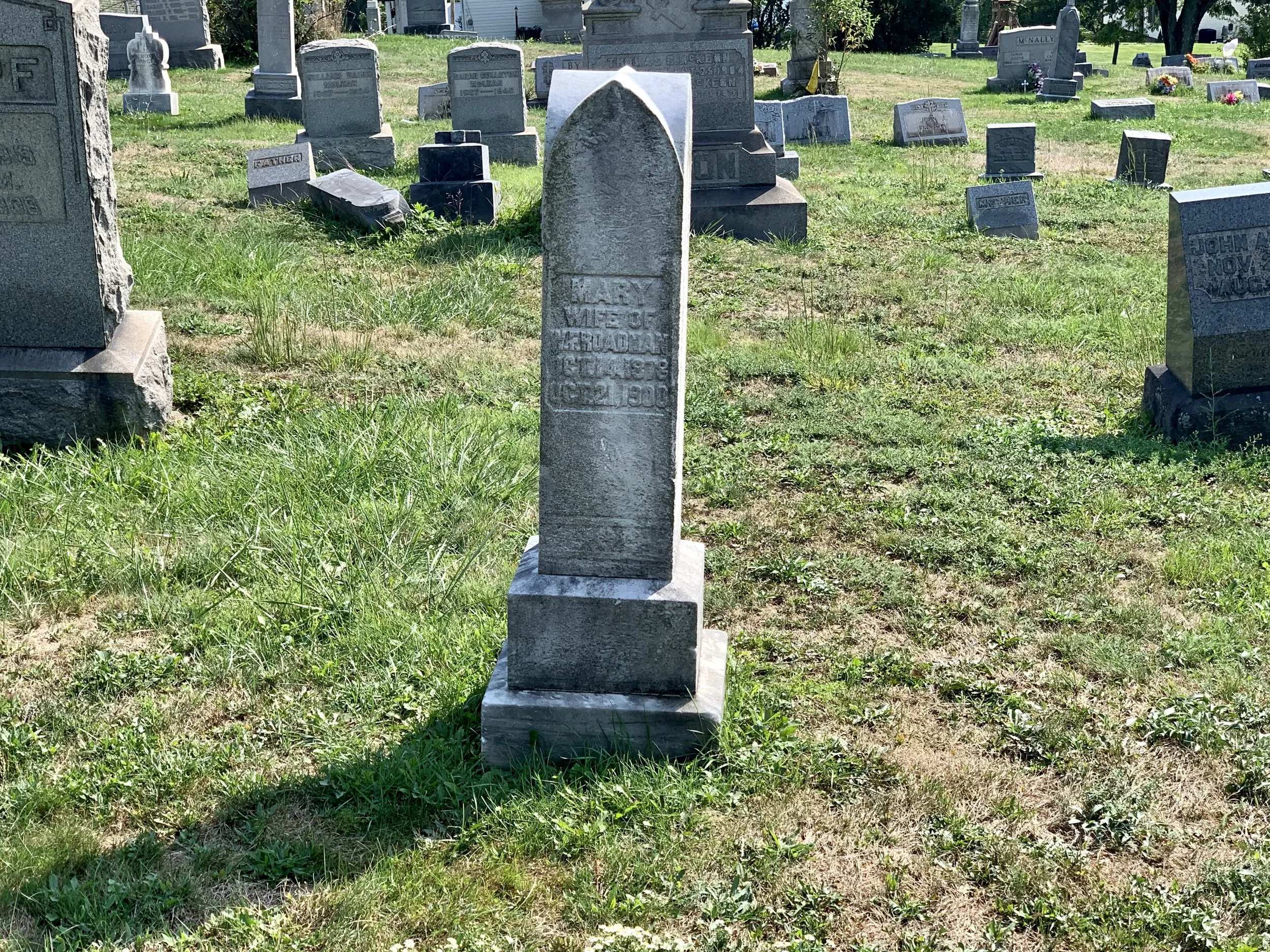
St. John the Baptist Cemetery, Scottdale
The marked grave of John's daughter; John's adjacent grave remained unmarked for generations
John Gowton and the Coke Country
An immigrant laborer's life in the industrial world of southwestern Pennsylvania
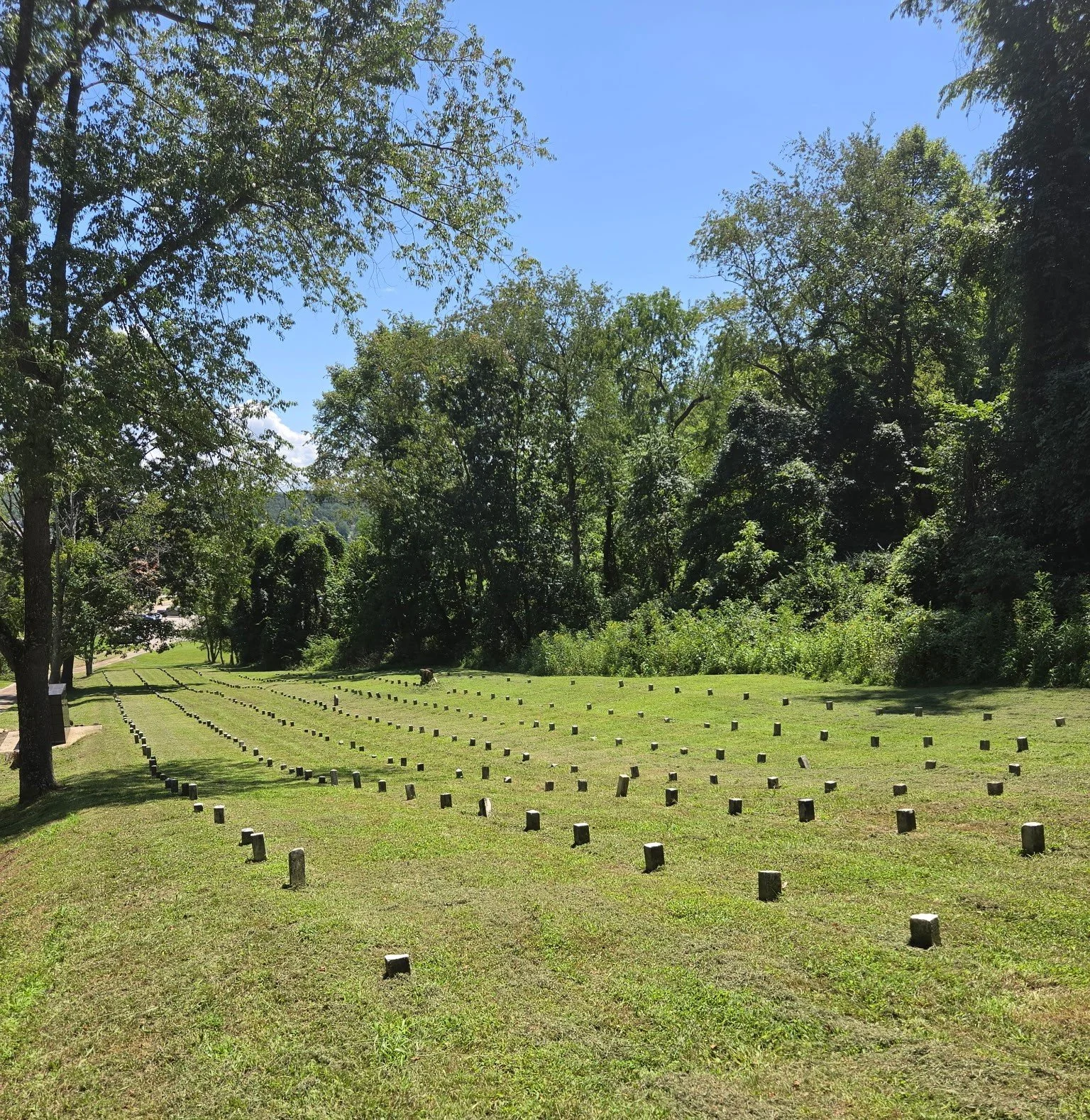
The Paupers' Graves
A reminder of the fate that awaited many working families who lacked the means for burial.
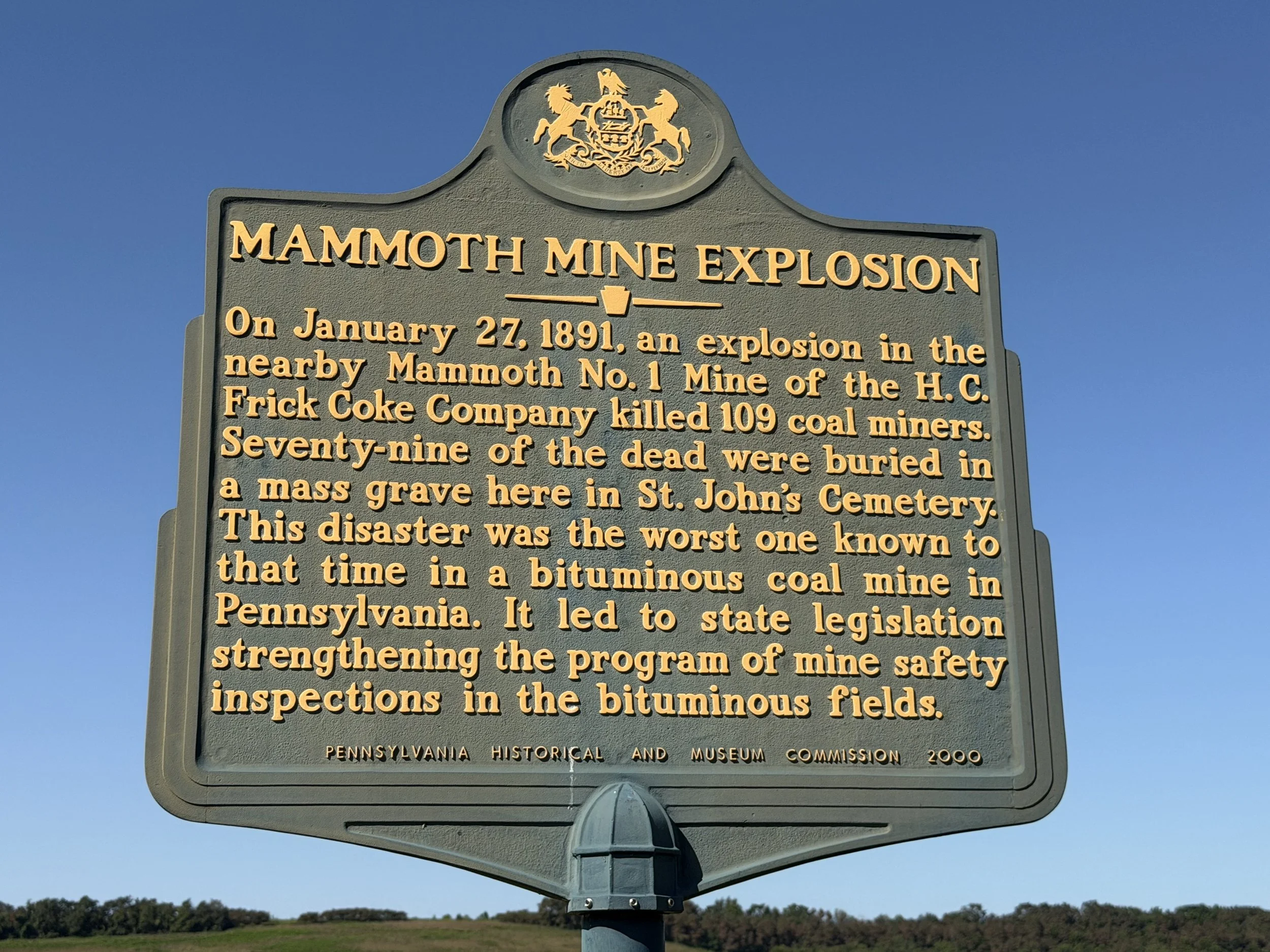
Mammoth Mine Explosion, 1891
Seventy-nine victims of the Mammoth Mine disaster were buried at St. John the Baptist Cemetery.
Originally shared with the Pennsylvania Genealogy Network
Facebook · August 18, 2026
Pennsylvania Genealogy Network
From Durham To Pennsylvania
As an amateur genealogist, I'm fascinated by the industrial period and labor movement in southwestern Pennsylvania, specifically the Scottdale/Everson area (Everson was earlier known as Upper Tyrone).
My great-great grandfather, John Gowton, was a coke burner by trade from the Bishop Auckland area of Durham County, England. He emigrated in 1870, sailing, we believe, from Liverpool to Quebec City, then made his way to Butler, PA, where he first worked as a railroad laborer helping lay track.
By 1880 he had settled along Jacobs Creek in South Huntingdon Township, working as a laborer and living near the railroad tracks (per the 1880 census). He eventually moved to Upper Tyrone, where he worked the coke ovens for the coal and coke industry, and later, as he grew older, at the Charlotte furnace in Scottdale.
Life in the Coke Country
By the time John settled into Upper Tyrone, the coke and coal industry there was almost entirely under the control of Henry Clay Frick, whose H.C. Frick Coke Company was headquartered nearby in Scottdale and dominated the entire Connellsville coke region, including the very beehive ovens John spent his working life tending.
It was brutal, exhausting work: twelve-hour shifts feeding and drawing ovens that burned around the clock, living in company-owned housing, buying from the company store, with little recourse against terms set by Frick and Carnegie.
Labor Unrest and the Morewood Massacre
When workers did try to push back, the response could be violent. In March 1891, deputies fired into a crowd of roughly a thousand striking miners and coke workers at nearby Morewood, killing nine men, many of them recent immigrants, like John himself.
I don't know whether John was caught up in that unrest directly, but it's hard to imagine a man in his position wasn't shaped by living and working inside a system where two of the most powerful industrialists in America held that much sway over an ordinary laborer's life.
By the time John moved from the ovens to the furnace, it likely wasn't ambition pulling him toward the work, it was the toll the ovens had already taken on his body. Coke burning was punishing, dangerous work with almost no safety regulation: burns, smoke and heat exposure, and injuries from the sheer physical strain were simply part of the trade, and immigrant laborers like John were routinely pushed into the hardest and most dangerous jobs the industry had to offer. There was little a man could do but keep working until his body gave out.
And when workers tried to build any kind of support network to push back, Frick's operations moved to dismantle it. Companies evicted striking families from company-owned housing, as happened during the 1891 strike near Morewood, and again during the 1910–1911 Westmoreland County strike, when evicted families were forced into tent colonies through the winter.
Enforcement fell to the Coal and Iron Police, a private force paid by the coal and coke companies but commissioned by the state itself, giving company guards the legal authority of law enforcement while they answered only to their employer. Frick had already shown how far he'd go to crush a strike: at Homestead in 1892, he brought in roughly 300-armed Pinkerton agents to put down a steel strike, a battle that left ten men dead. In the coalfields, the tactic ran the same in spirit, companies imported replacement labor, immigrants and Black workers recruited from elsewhere, often without telling them what they were walking into, with both groups funneled into the most menial and dangerous jobs, and the divisions between them used to keep workers from banding together.
It was a system built to keep men like John isolated and replaceable, and by the time age and injury caught up with him, there wasn't much of a safety net, inside the company or out, left to catch him.
When the Body Gave Out
John succumbed to burns he suffered in a fall into a slag pile at the Scottdale furnace in April 1900, out of work and died thirteen months later in May 1901. Like so many laborers of his era, he was buried without a headstone, and the exact location of his grave went unknown to our family for decades, found only after a fifty-year search.
John Gowton lies in St. John the Baptist Cemetery in Scottdale, the same cemetery that holds victims of the 1891 Mammoth Mine disaster and the Morewood massacre, along with countless other unmarked graves of coke and coal workers from this region.
A Burial Nearly Lost to History
That ground was opened to men like John through the intervention of Father Michael A. Lambing, the parish's longtime pastor and a notable figure of the era in his own right, who together with a benefactor named Lida (Lyda) McPhilomy spared John a burial in the potter's field and secured him a consecrated resting place.